24 Hours in Siena
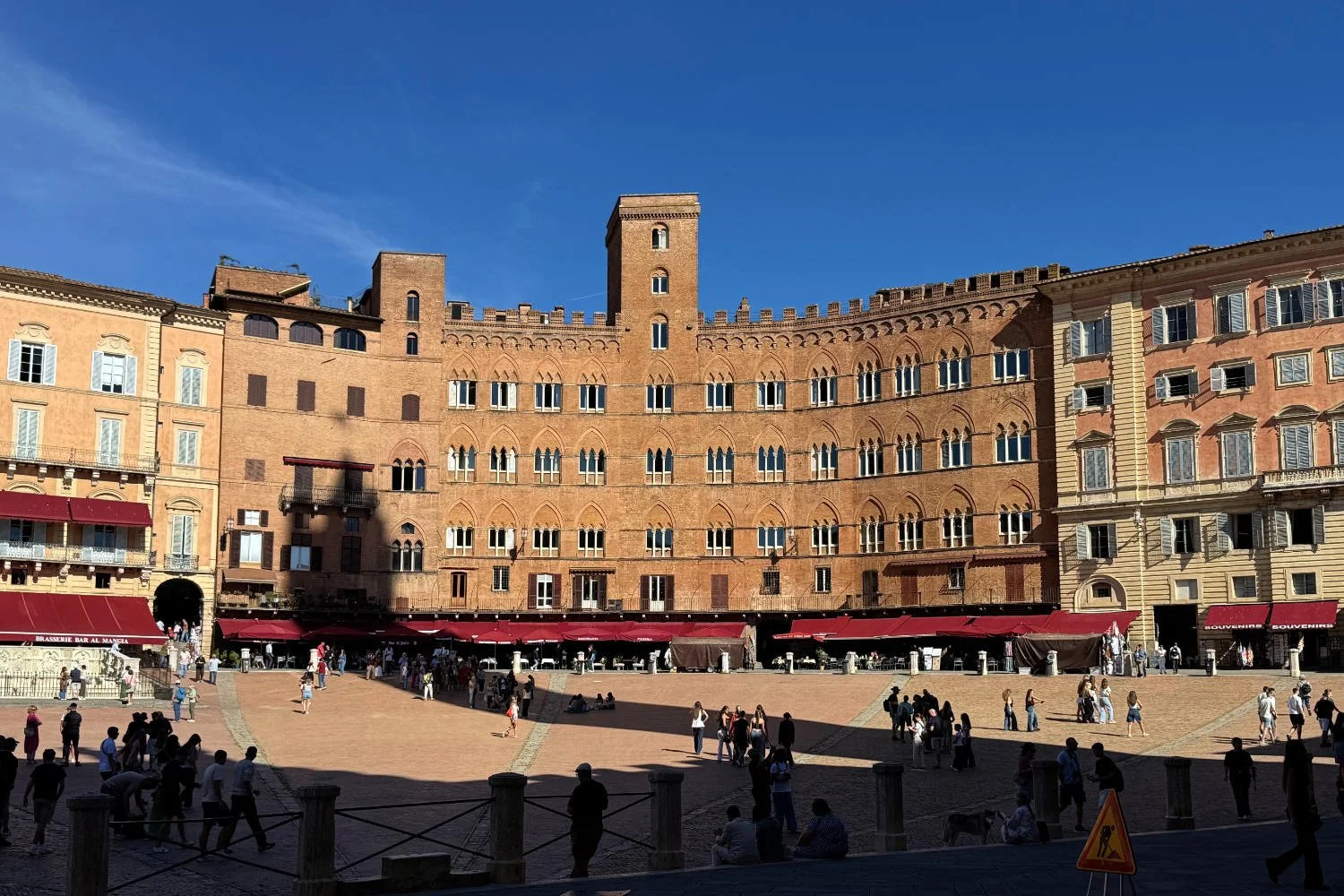
Piazza del Campo
Overview
Cor magis tibi Sena pandit
‘Siena opens her heart to you still wider’
– inscription over the Porta Camollia
Siena has the people who have been to Florence and want something better.
Smaller, quieter, steeper and, arguably, more beautiful: a whole medieval city built of brick the colour of its own name, burnt Siena, folded over three hills.
Give it a day and a night. The rules as always: get up early, sleep in the afternoon, walk everywhere, Put the map away.
24 Hours
7am – The maze, before breakfast
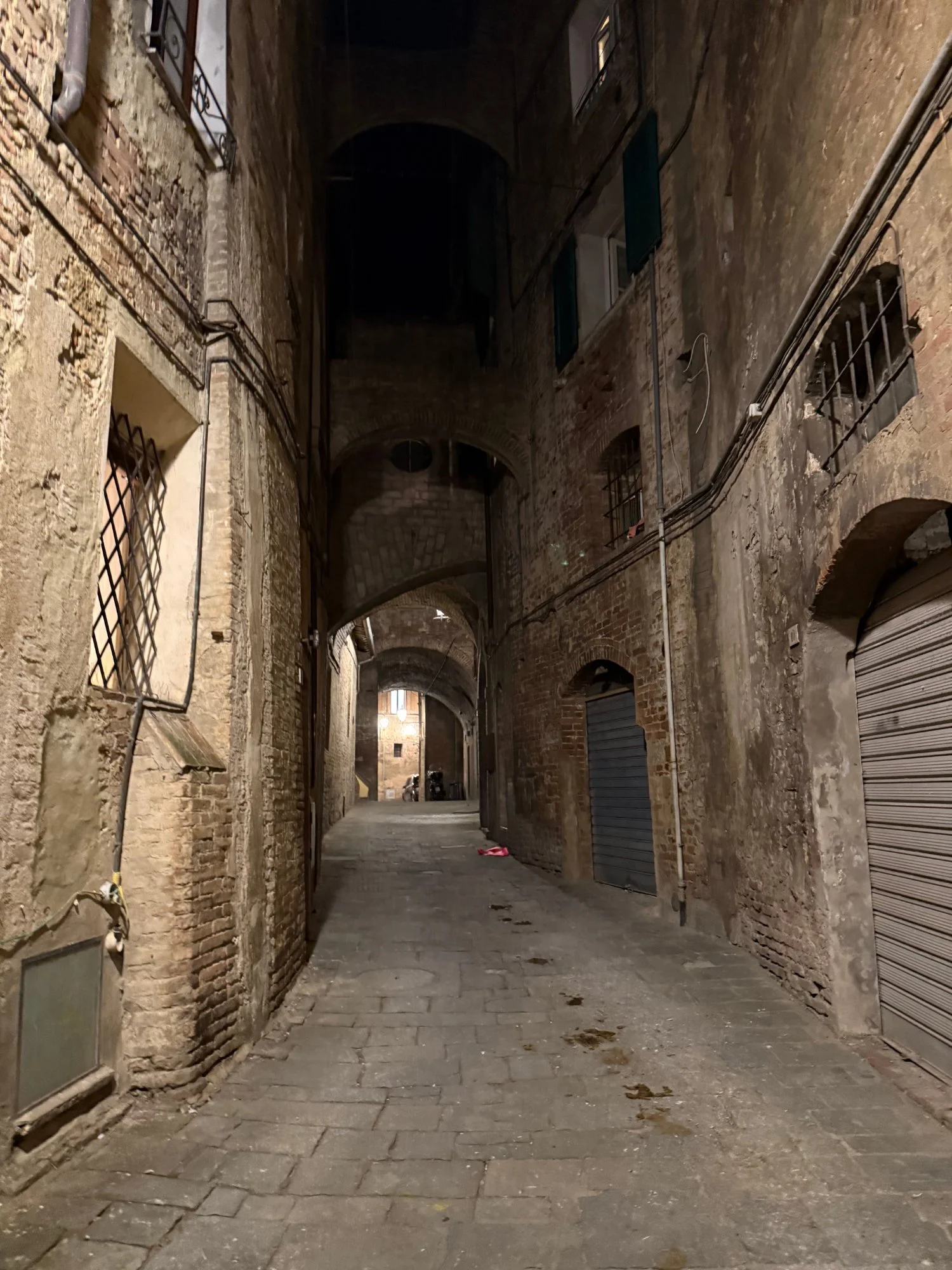
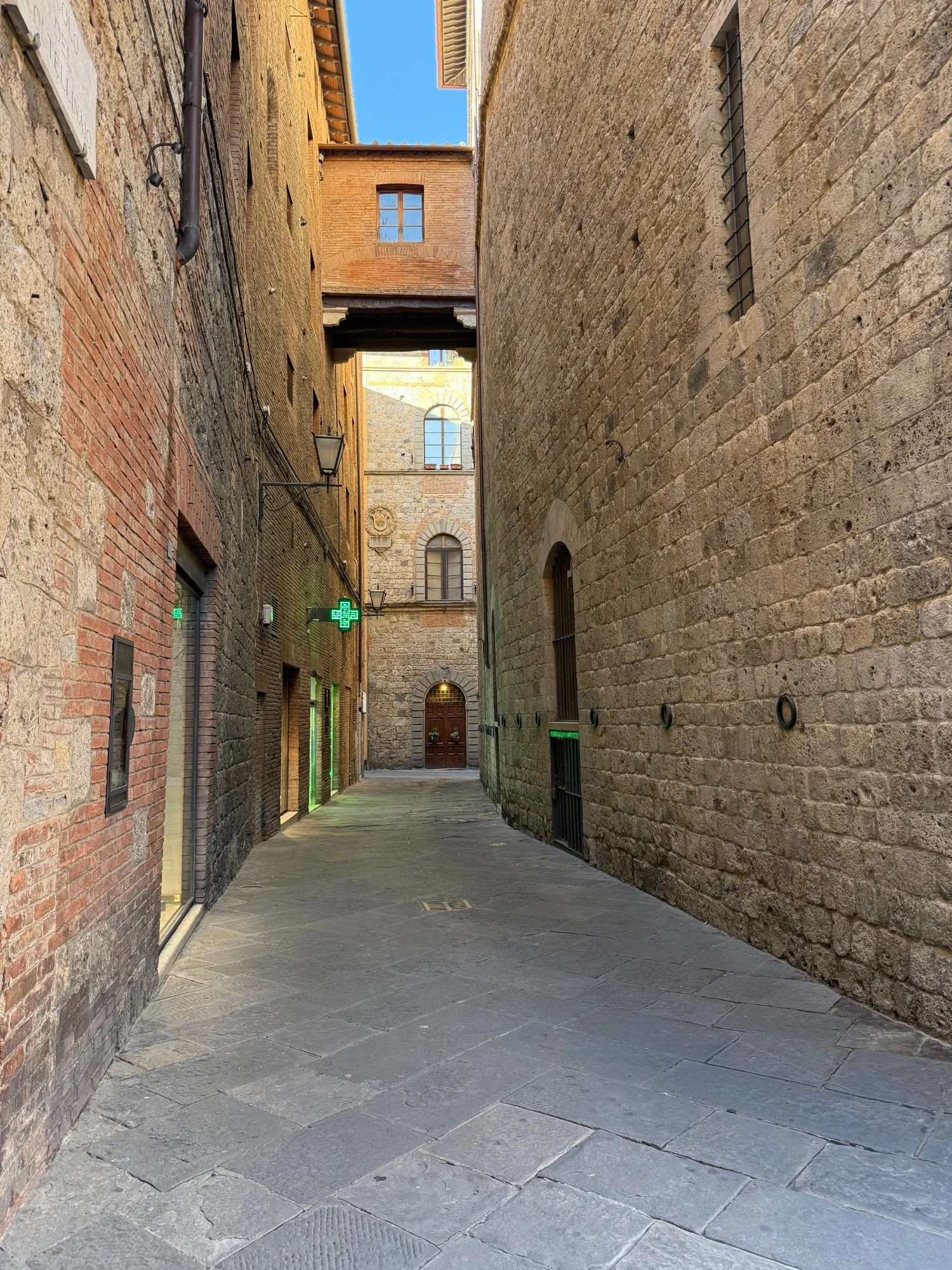
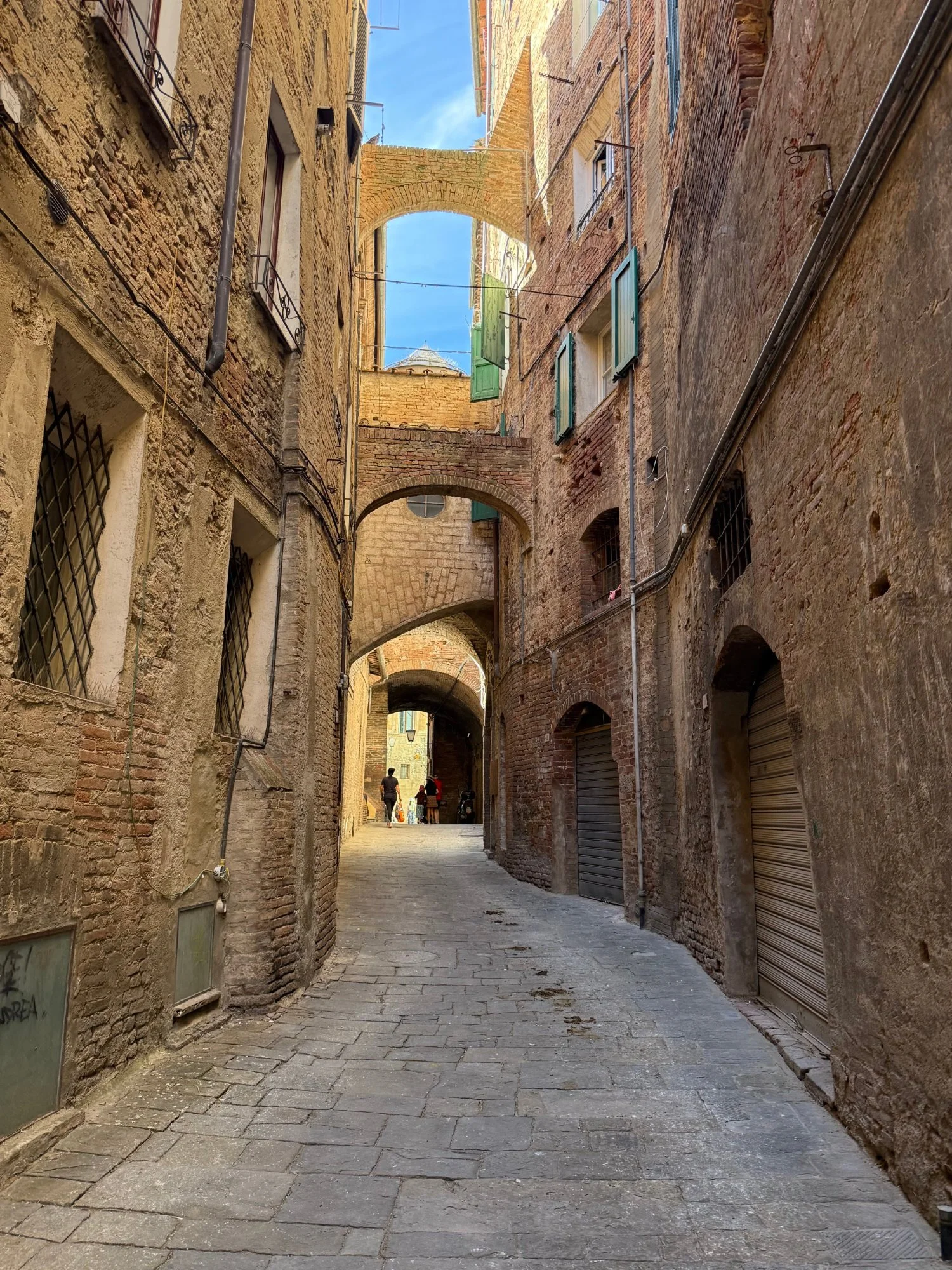
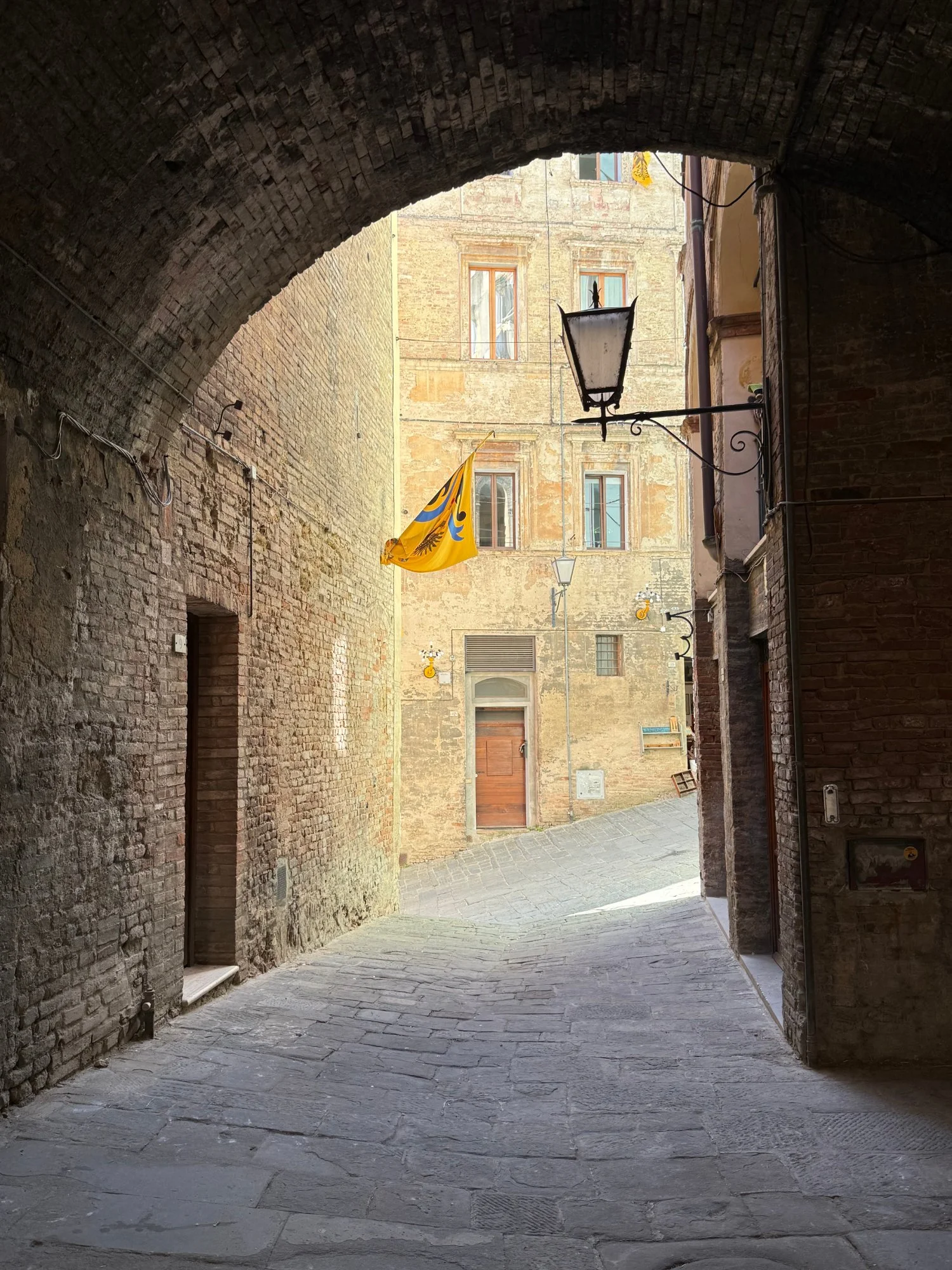
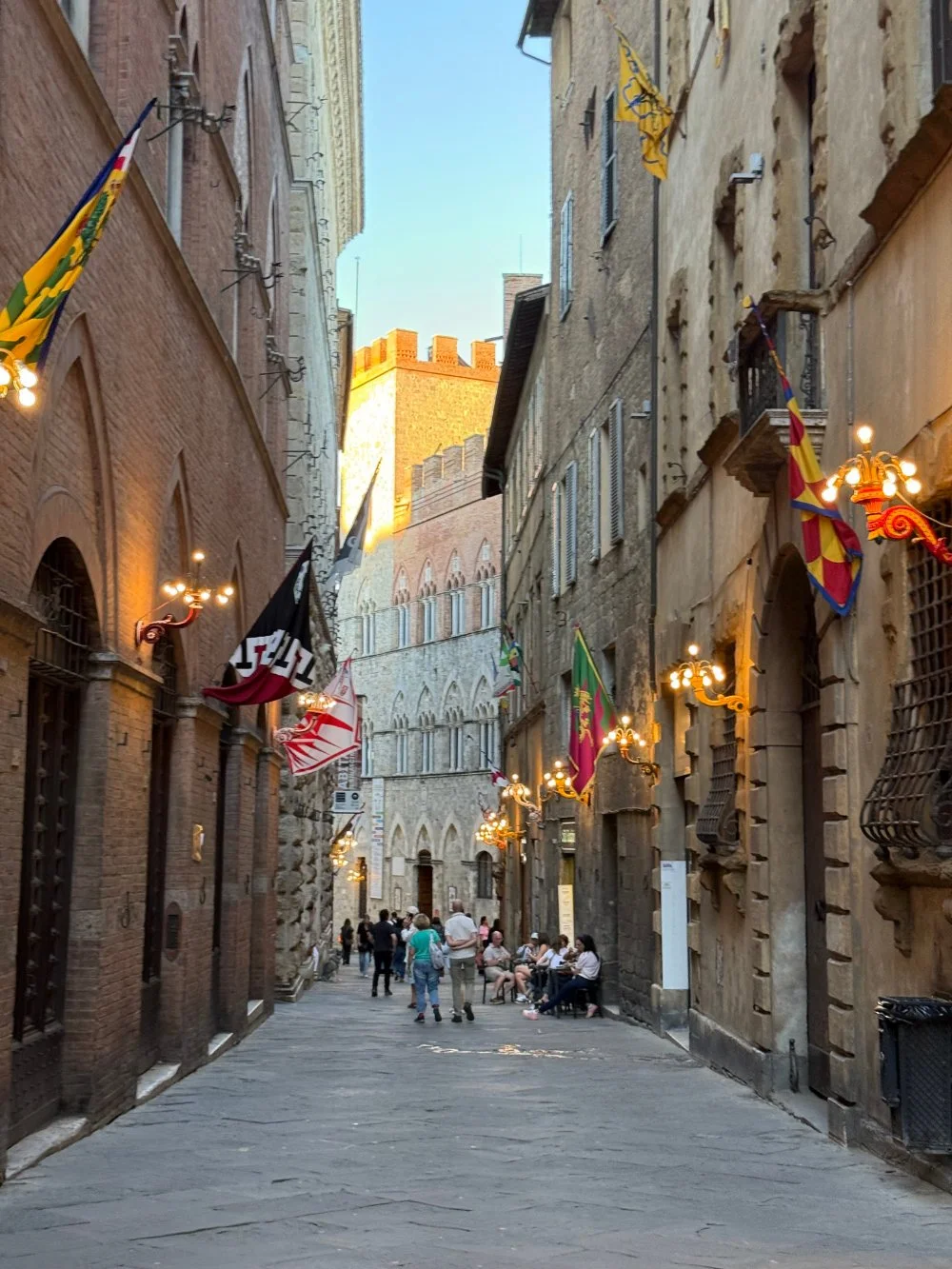
Siena is best before anyone else is awake. Walk out into deserted streets, framed by arches, down steps and up steps.
Church bells.
The smell of bread.
Gilded sunlight above, cobbles below.
The buildings are tall and close, their colours rusk, ochre and dull pink, the brick still holding last night’s warmth.
Avoid using your phone. In these close, steep lanes the satellite signal gives up anyway. Every street seems to lead downhill, and every downhill street seems to lead, eventually, to the Campo. To be lost is the point.
Look up. Flags hang from poles on the buildings, each belonging to one of the seventeen contrade, the historic neighbourhoods of Siena, each with its own emblem: a goose, a snail, a porcupine, a wave, an eagle, a dragon. Cross an invisible line and the flags change, for you have crossed into another contrada.
And look out for the wolf. On columns and above doorways, a small bronze she-wolf suckles two boys. The Sienese trace their founding to Senius, son of Remus, and like to think of themselves as cousins of Rome rather than neighbours of Florence.
8am – Coffee on the Campo
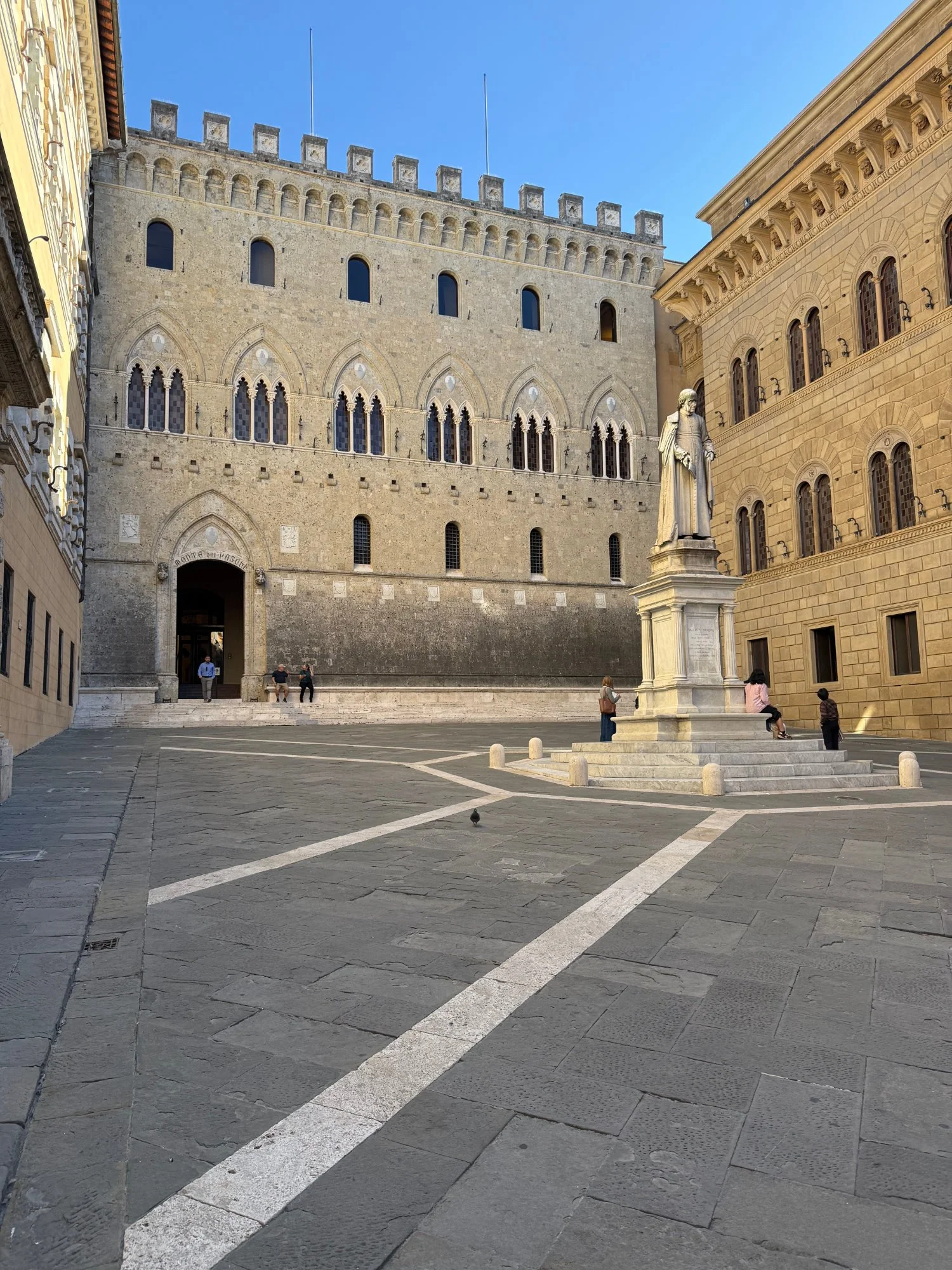
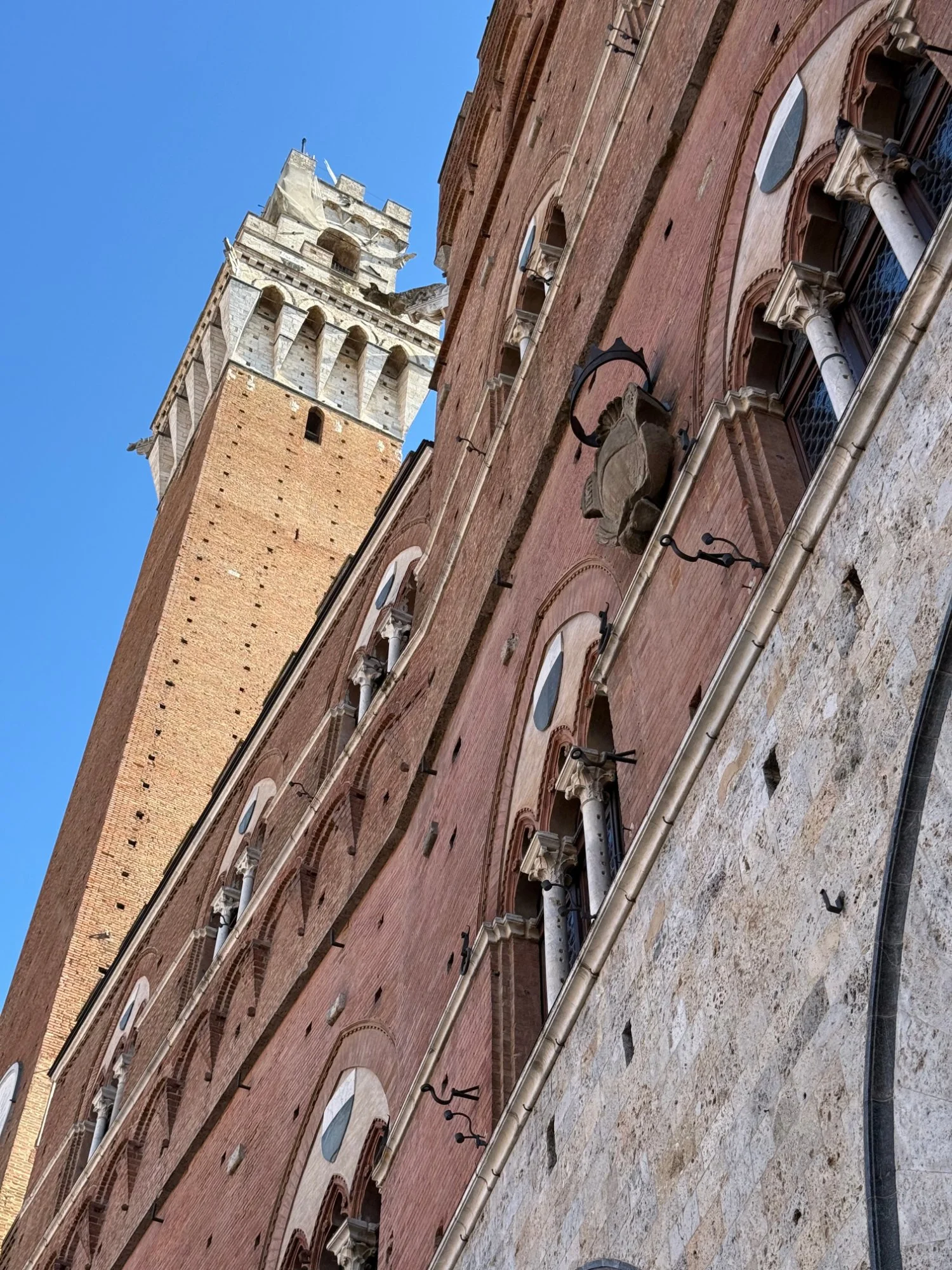
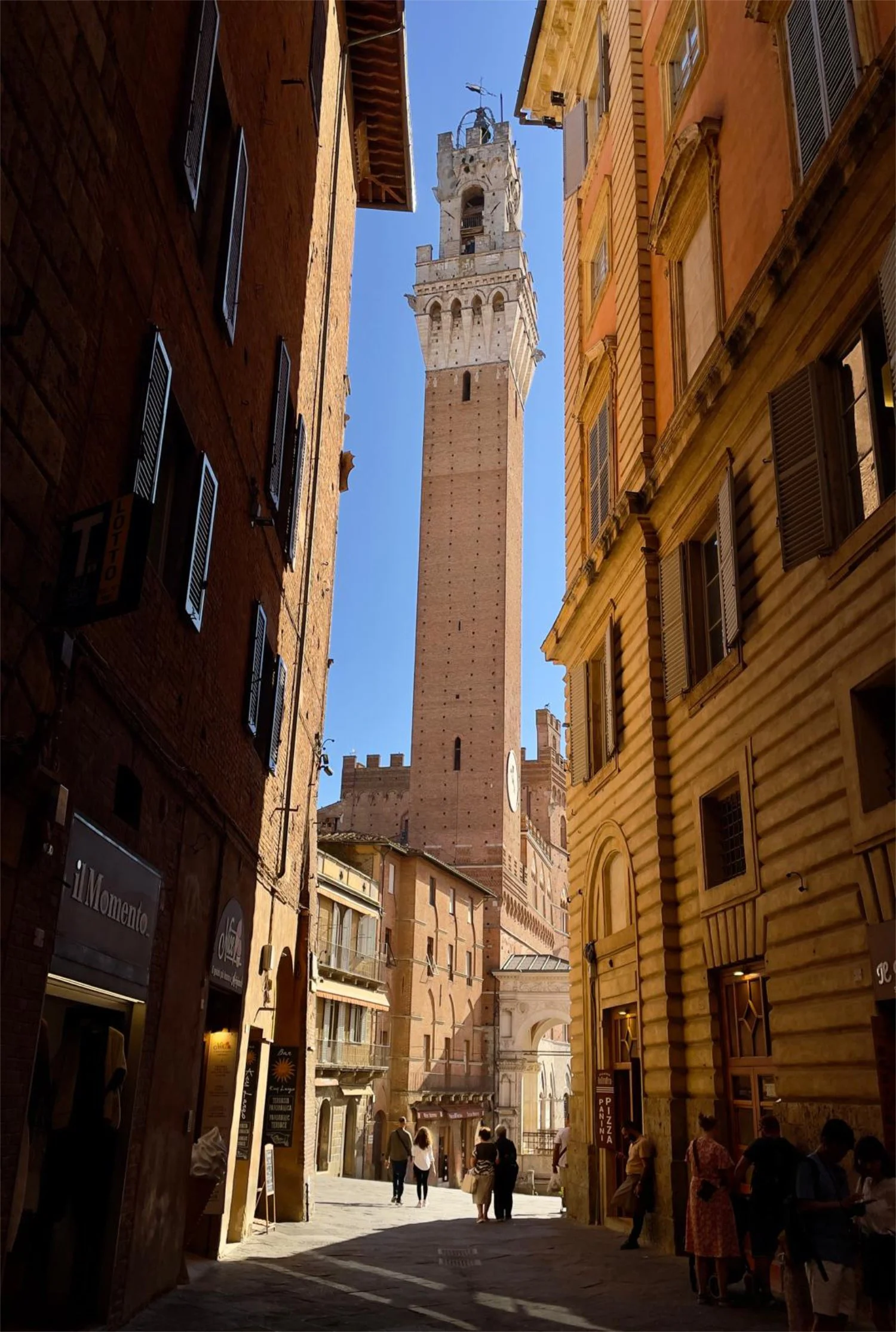
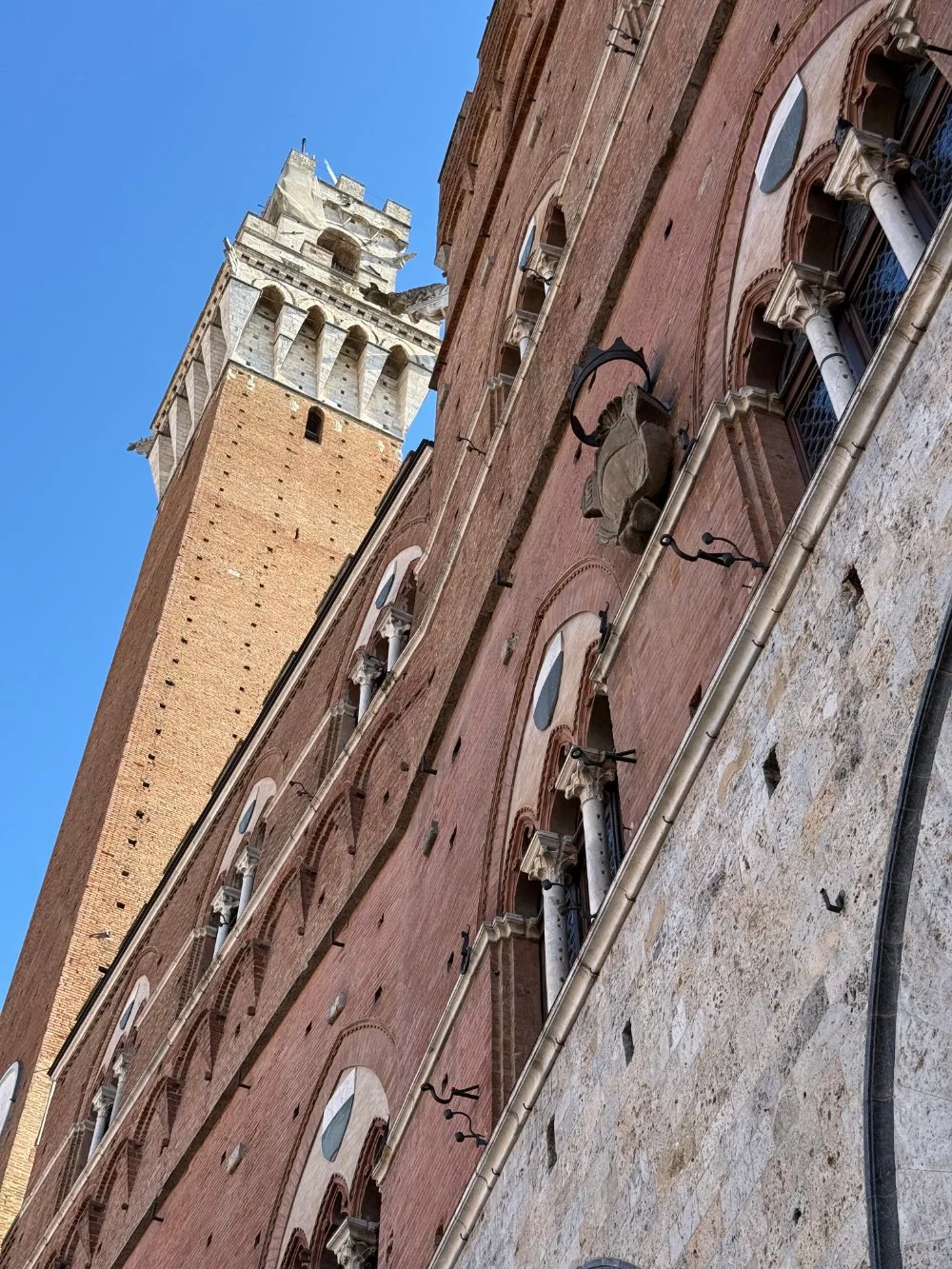
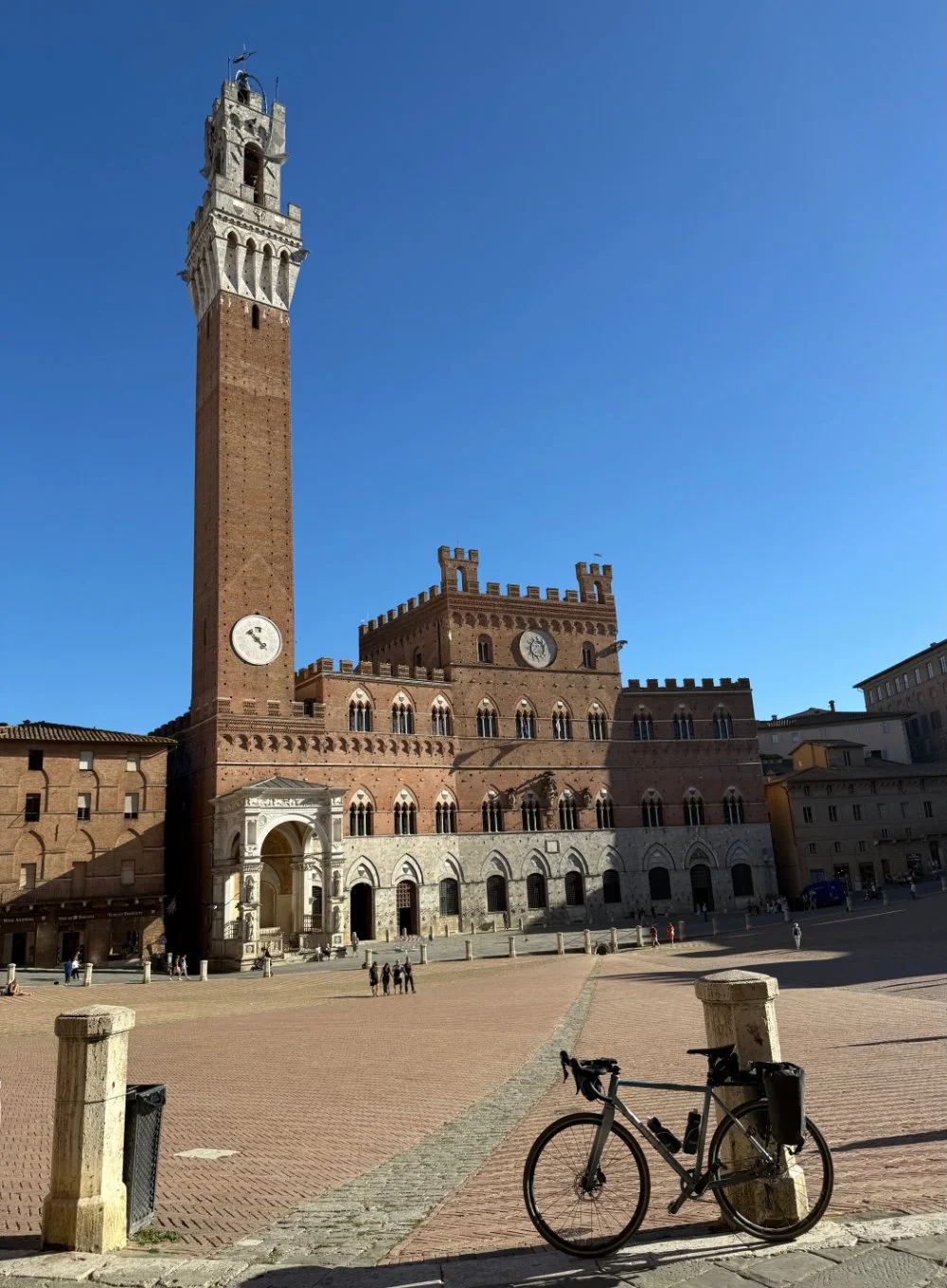
Emerge, as everyone eventually does, into the Piazza del Campo: a great sloping shell of brick, fanning down towards the Palazzo Pubblico and its impossibly slender tower, La Torre di Mangia. The shell is divided into nine sections, said to honour the Nine, the merchants who governed the city when it was built.
At this hour it belongs to street sweepers, pigeons and delivery vans. Take a table at any of the cafés around the rim. They are all much of a muchness: the coffee is ordinary and the prices are not. What you are paying for is the view, and at eight in the morning, with the sun just reaching the tower, it is worth every euro.
If you care more about the coffee than the view, walk up Via di Città to Torrefazione Fiorella, a proper roastery, and drink it standing at the bar like a Sienese.
9am – The Palazzo Pubblico
The heart of Siena, and the reason to come. Buy a ticket for the Museo Civico and go straight upstairs before the groups arrive.
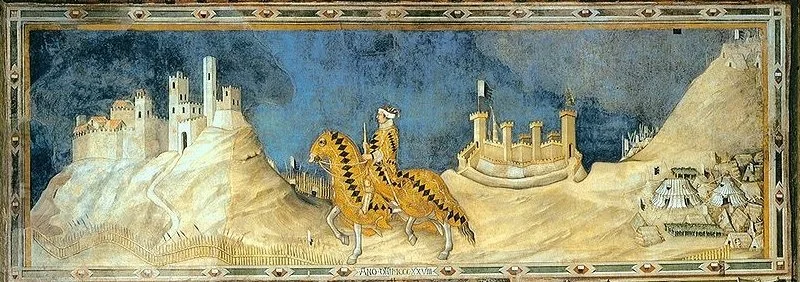
In the Sala del Mappamondo, a man rides alone across the wall. Guidoriccio da Fogliano, a hired soldier, all in gold and black diamonds, on a horse dressed to match. No battle. No army. Nobody on the road. Only bare ochre hills, the castle he has come to take, and an ultramarine sky going black above him. And he looks so pleased with himself. Facing him across the room is Simone Martini’s Maestà, the Virgin enthroned beneath a canopy, painted for the city’s council in 1315.
Next door is the Sala dei Nove, where the Nine met beneath Ambrogio Lorenzetti’s Allegory of Good and Bad Government. On one wall, a busy, well-ordered city and its cultivated countryside; on the other, a ruined town, soldiers roaming, neglected fields. In the city of good government, people buy and sell, a shoemaker lays out his goods, young people dance in the street. Above the gate floats Securitas, promising that all may travel without fear – and holding a gallows, with a man hanging from it. So that is how the peace is kept. A reproduction ought to hang in every government office in the world.
You will probably share the room with a school party. Of twenty students, two will be looking. Be one of the two.
If your legs are up to it, climb the Torre del Mangia: some four hundred steps to a view across the rooftops to the hills Lorenzetti painted. They have barely changed.
1pm – Lunch: L’Osteria dei Rossi
Cross the Campo and climb into the lanes just north of it, off Banchi di Sopra, to L’Osteria on Via dei Rossi. Brick vaults, tables out in the street in summer, simple local cooking that follows the seasons, and prices that would embarrass the cafés on the Campo. Try the pici Siena’s own pasta, thick and hand-rolled, each strand a little different from the next.
2.30pm – Sleep
Do as the Sienese do. Draw the shutters. The shops close, the sun is at its fiercest, the Duomo is at its most crowded.
4.30pm – The Duomo
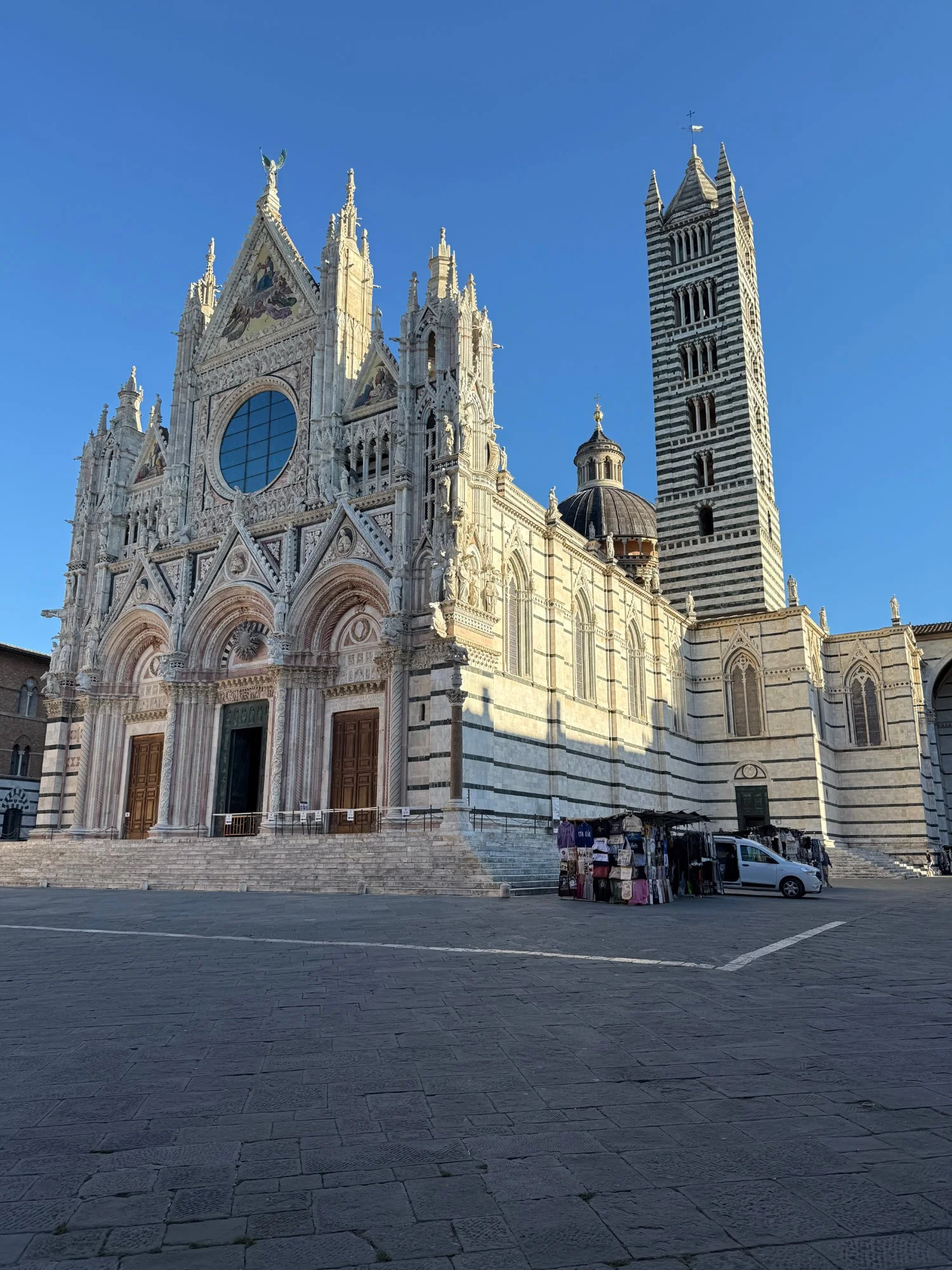
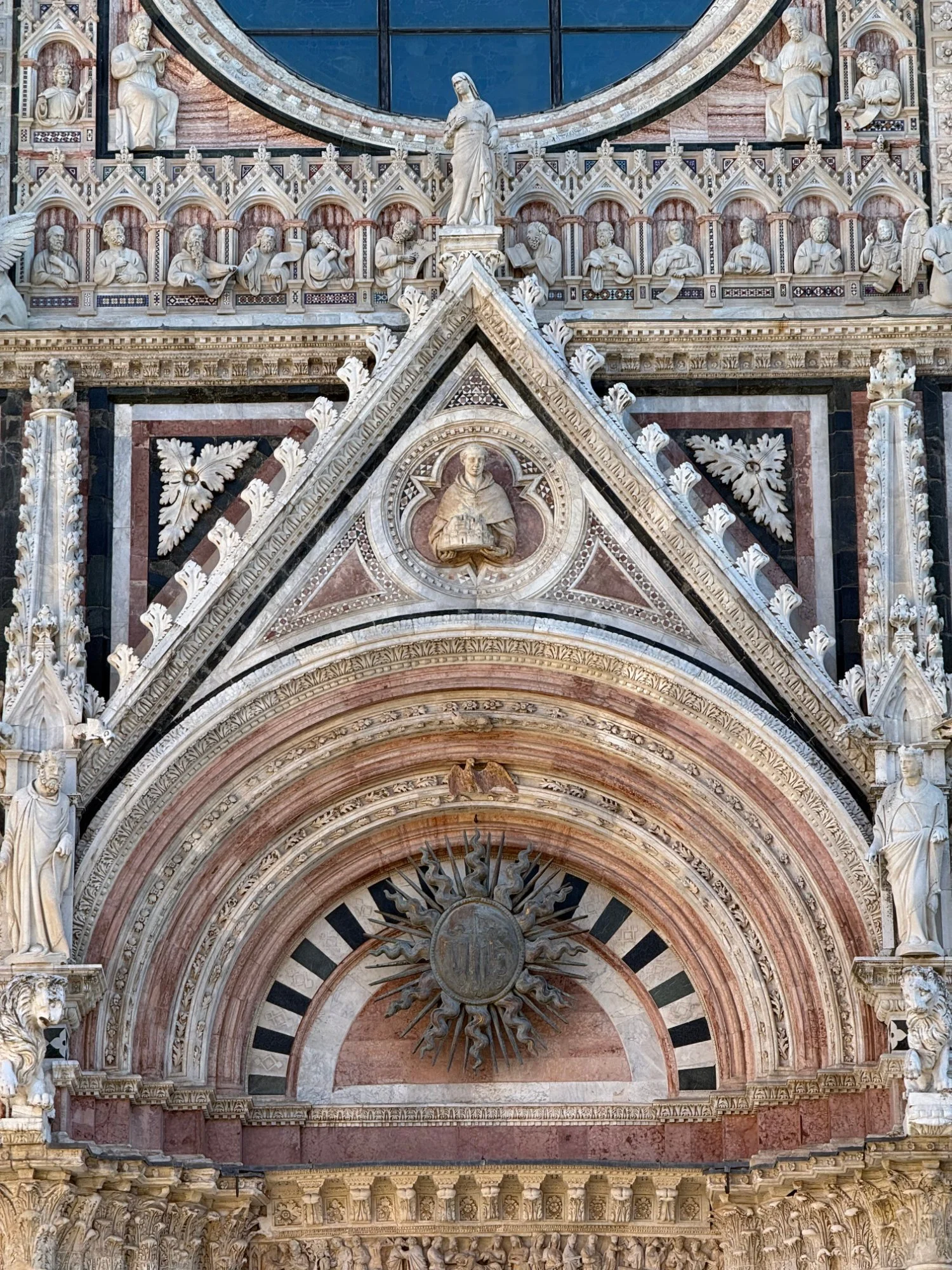
Walk to the Piazza del Duomo and stand back. The cathedral is striped black and white, the colours of the city’s coat of arms, and its façade is a riot of saints, prophets and beasts. To one side stands a vast unfinished wall, the Facciatone: all that remains of a plan to build a cathedral even bigger, abandoned when the plague of 1348 emptied the city.
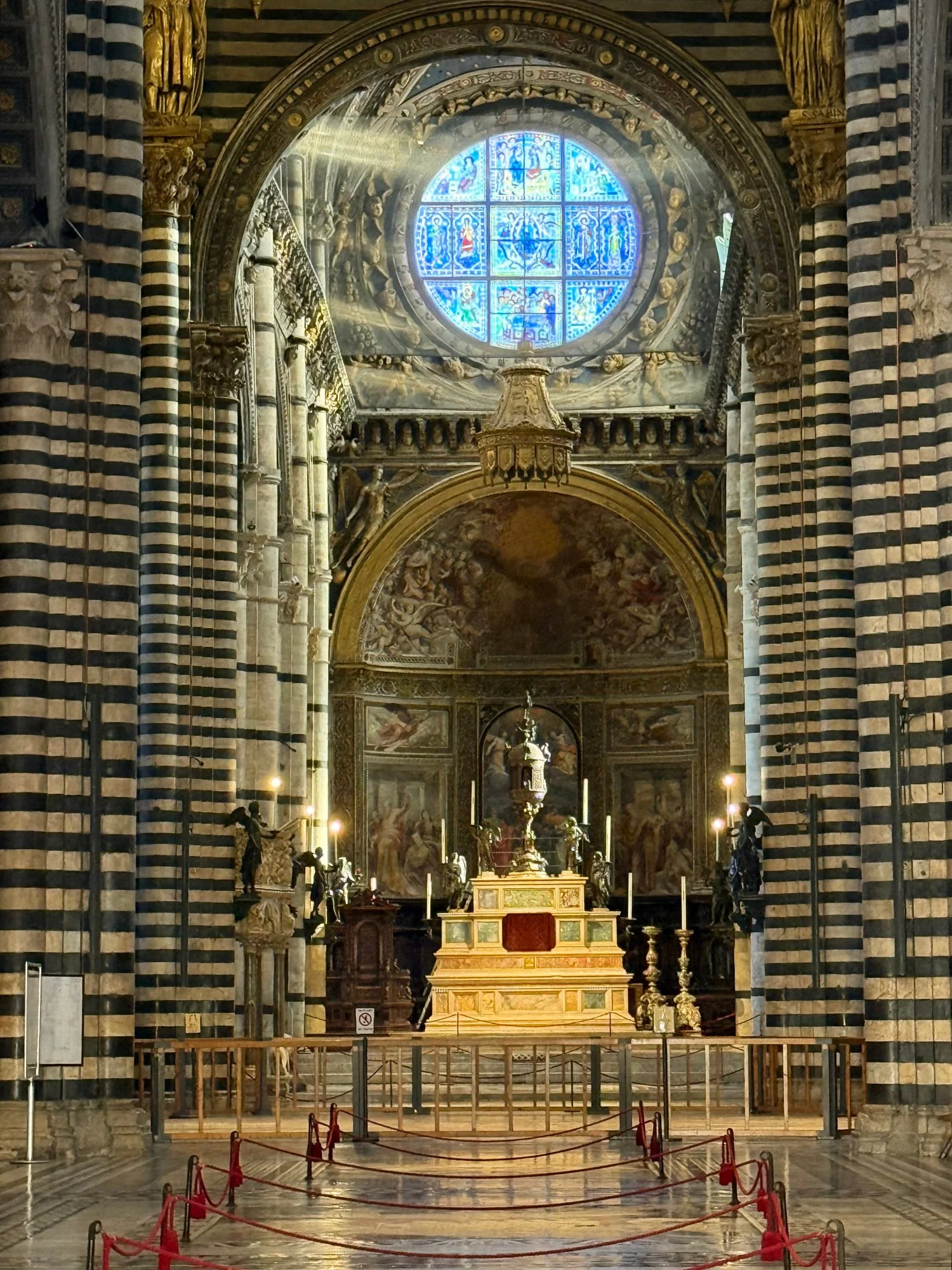
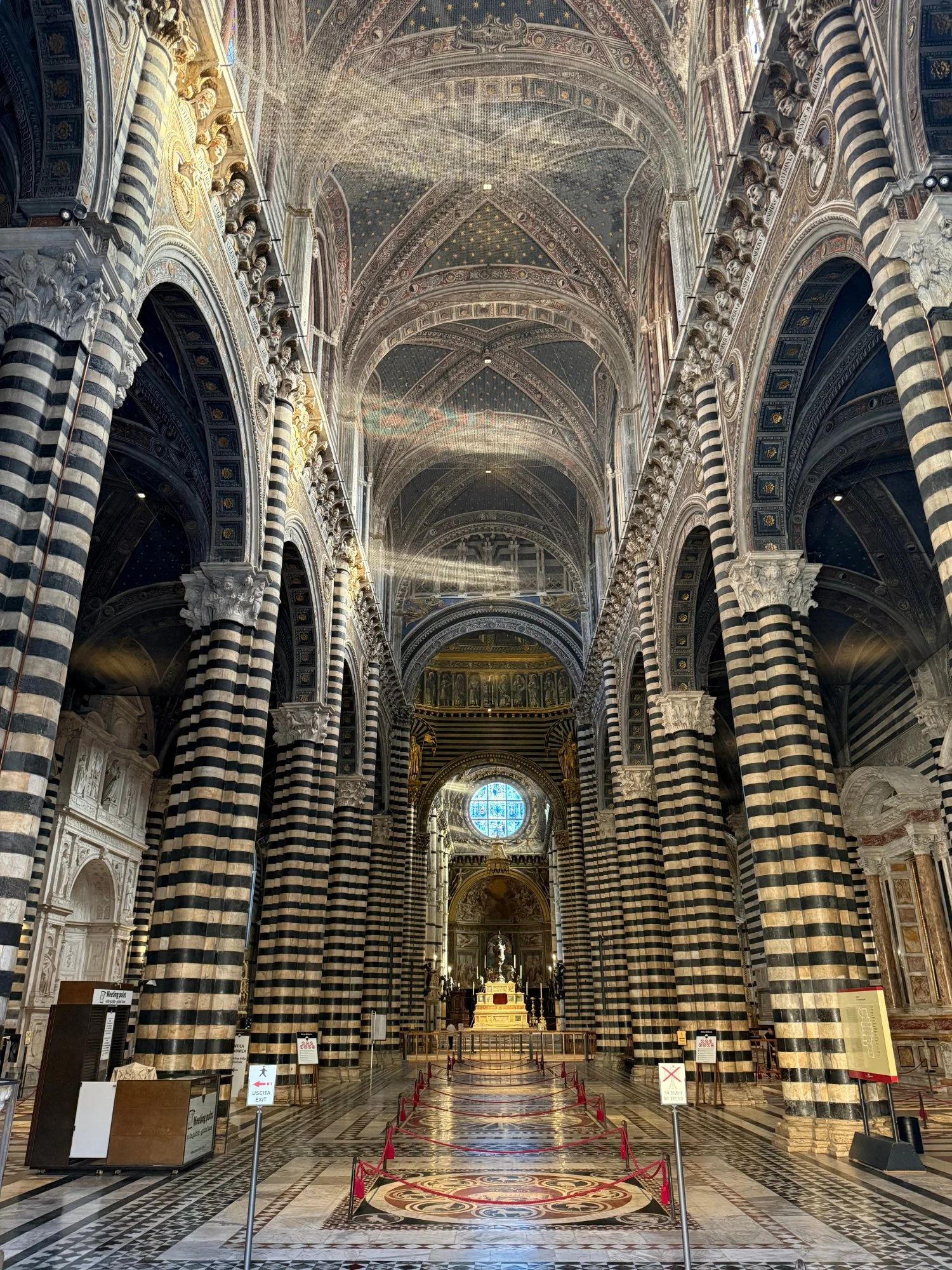
Inside: zebra-striped columns, Nicola Pisano’s marble pulpit, and the Piccolomini Library, where Pinturicchio’s frescoes of the life of Pope Pius II are as bright as the day they were painted. The great marble floor, fifty-six inlaid scenes made over some five centuries, is covered for most of the year to protect it. The Museo dell’Opera, attached to the Cathedral, holds Duccio’s Maestà, one of the greatest paintings of the Sienese School.
6.30pm – The Campo at dusk
Come back down to the Campo and do what both the Sienese and visitors do: sit on the warm brick. Watch the shadow of the tower swing across the shell.
Twice a year this piazza becomes something else entirely. On 2 July and 16 August, ten of the seventeen contrade race the Palio: three laps of the Campo, bareback, around a track of packed earth laid over the brick, with the city packed into the middle. It lasts about ninety seconds. The rivalries last all year. The flags you saw this morning are not decoration. Each contrada has its own church, its own fountain, its own museum, and its children are baptised into it.
8.30pm – Dinner: Osteria Le Logge
‘Eating is important; eating well is essential,’ said Gianni Brunelli, who made Osteria Le Logge what it is. A short walk from the Campo on Via del Porrione, in an old shop still lined with its wooden cabinets, it is the best table in Siena. Book ahead. Order the pork if it’s on: fed on chestnuts, as delicate as a creamy pudding.
10.30pm – The evening walk
Walk it off along Banchi di Sopra, the old main street, where the whole city seems to stroll after dinner. Head north towards the Porta Camollia and read the inscription over the gate once more. Siena opens her heart to you still wider.
She does.
Practicalities
Getting there: Siena is on a branch line, so trains are slow; buses from Florence are often quicker. The station is below the city, linked by escalators. Cars are banned from the historic centre.
Getting around: on foot. Comfortable shoes: everything is uphill, then downhill, then uphill again.
Tickets: the Museo Civico and Torre del Mangia sell separate and combined tickets, and the tower has limited numbers. The Duomo complex has its own combined pass. Check times and book ahead in summer and when the floor is uncovered.
Food: Torrefazione Fiorella, Via di Città - for good coffee and brioche, L’Osteria dei Rossi, Via dei Rossi, Osteria Le Logge, Via del Porrione, 33,
When to go: spring and autumn. Around the Palio (2 July and 16 August) the city is packed and prices rise – thrilling if you want the race, exhausting if you don’t.
Every route on this website has been carefully researched as well as ridden. However situations on the ground can change quickly. If you know of changes to this route, or cafes, pubs and the like which you think other cyclists need to know about, feel free to share your thoughts below.
Where My Feet Go, is a companion website to Where My Wheels Go, dedicated to providing free-to-download, traffic-free cycling routes.